How long would it take to get to Mercury?
Data as of July 2026
9.8 yearsby jet, without stopping
Mercury comes within 77 million km of Earth at closest approach. In a straight line at airliner speed that's 9.8 years of continuous flight. The fastest spacecraft ever launched would need 55 days.
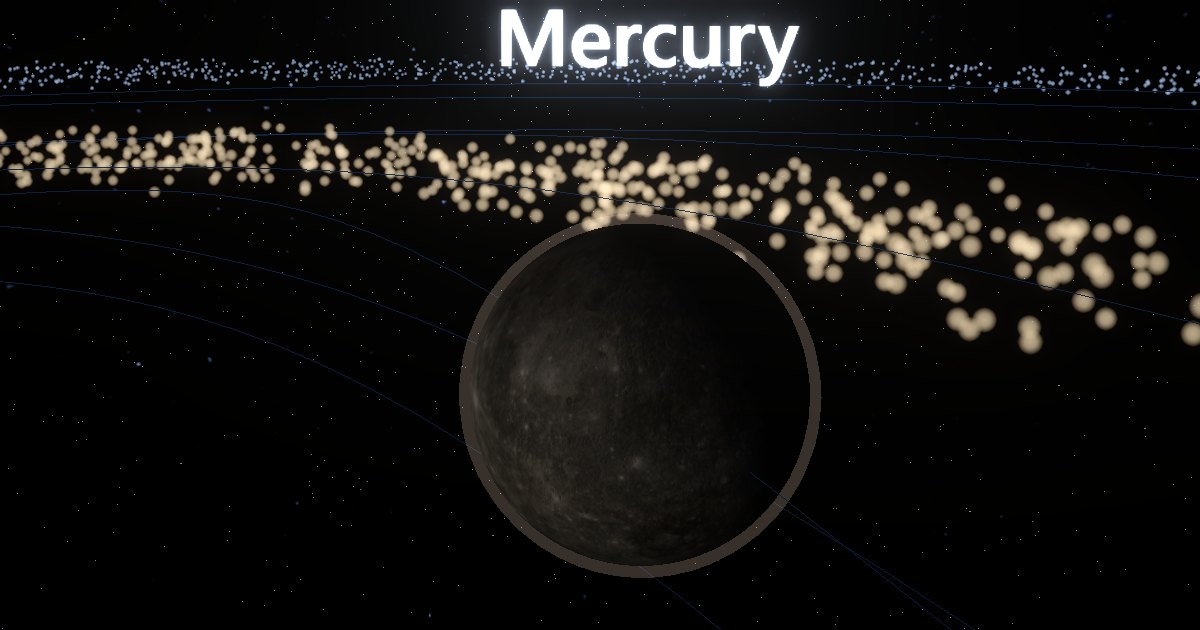
▶ See how far Mercury really is
The honest timetable
Family car (100 km/h)
88 years
Jet airliner (900 km/h)
9.8 years
New Horizons: fastest launch ever (58,500 km/h)
55 days
Light (299,792 km/s)
4.3 minutes
Those are straight-line times at the moment of closest approach: the absolute best case. Real spacecraft can't fly straight there: they follow long curved transfer orbits, sling around planets for free speed, and have to slow down at the other end. NASA’s MESSENGER needed 6½ years of looping flybys, not to catch Mercury up, but to slow down enough against the Sun’s pull to orbit it.
A solar day on Mercury (sunrise to sunrise) lasts two of its years. And it isn’t even the hottest planet.
See the gap for yourself: open Mercury in the interactive view, switch to 1:1 scale, and try to find Earth from there.
Keep going
✓ Facts verified July 2026
Every figure on this page is a real, rounded value checked against primary sources. Found something out of date? See how we keep it accurate.