What is the closest planet to Earth?
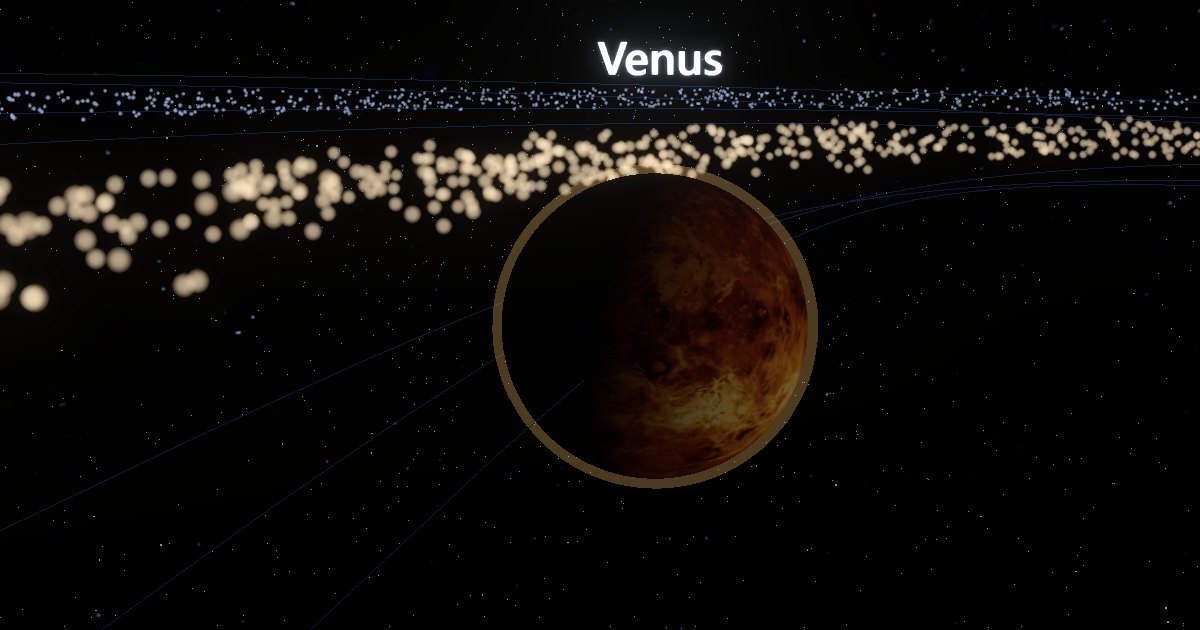
Closest approach vs closest on average
When people say Venus is our nearest neighbour, they mean its minimum distance: at a close approach Venus is nearer than any other planet ever gets. But planets are only lined up like that briefly. Most of the time Venus is somewhere else in its orbit: often on the far side of the Sun, over 250 million km away.
A 2019 analysis pointed out the overlooked consequence: to find the planet that is usually closest, you average distance over the whole orbit. Mercury, tucked close to the Sun, never gets very far from Earth, so it wins. By that measure Mercury is not only Earth's most frequent nearest neighbour, it is on average the closest planet to every other planet in the solar system, too.
The numbers
Watch it happen in the interactive view: let the orbits run and see how rarely Venus is actually beside us, and how Mercury keeps circling close to home.
Keep going
Every figure on this page is a real, rounded value checked against primary sources. Found something out of date? See how we keep it accurate.